Showing posts with label Don. Show all posts

Tuesday, October 14, 2014

Scumbucket Charisma


The Lovable Anti-Hero
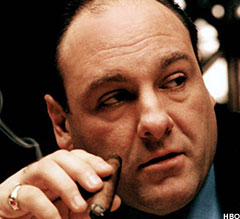
Is it merely coincidence that three of Netflix' most popular shows are 'protaganized' by three of the world's most self-interested deviants?  I'm referring of course to the three above; Walter White from Breaking Bad, Frank Underwood of House of Cards, and the notorious Don Draper from Mad Men.

Oh and let's not forget:

Jax Teller from Sons of Anarchy                                          Nancy Botwin of Weeds

Dexter of Dexter                                                      Tony Soprano of The Sopranos

Do we understand the current climate of our television programs? 

In one of my first blogs, I laid out the Hero's Journey according theologian Joseph Campbell, and how Don Draper fit into that archetypal model.  I stand behind the idea that Don Draper, like most protagonists, follow a similar archetypal journey throughout the plot of a given story.  However, somewhere along the way it seems it became good, to be bad.

We love rebellion. Most cult-groups promise some sort of stray from the norm.  The Grateful Dead became one of the most universally recognized cult-bands of all time because they offered a lifestyle of sex, drugs, and rock n roll through their music. People with Jeeps can drive far off the beaten path, because they're adventurous and DIFFERENT.

Joseph Campbell wrote "The Hero with A Thousand Faces" in 1949.  He argued that almost every story ever written, including Moses' journey through the dessert and myths of ancient Greece and Mesopotamia, had a similar main character plot structure.  The profane human becomes a hero, goes on a journey with struggles and abysses, learns a valuable lesson, and returns home, transformed.  I believe that the anti-hero television movement aims to stray from this long-established norm.

Consider the 2001 Steven Soderbergh movie, "Ocean's Eleven." While I realize the movie was originally filmed in 1960 starring Frank Sinatra and Sammy Davis Jr., Soderbergh brought back a powerful idea, of cheering for the bad-guy. Danny Ocean and his crew of 10 dudes, (10 + 1 = 11; i.e. Ocean's Eleven) plan to heist a Las Vegas casino for millions.  Oh and he made sure to incorporate three generations of hunks in George Clooney, Brad Pitt, and Matt Damon.  When you have bad-ass charismatic lead men like this, it almost authorizes them to do whatever they want and the audience will hop on board with the cause.

So thus, we have Walter White dissolving bodies in acid and Frank Underwood pushing his journalist-with-benefits in front of a train.  Don Draper is one of the most interesting case studies in turning south because, excluding his nuptial infidelity, he's not always a terrible guy.  For the first 2 seasons, Draper doesn't want to cheat on Betty, things are nice at home, and he values his relationship with Bobby and Sally.  But at the beginning of the end of his marriage with Betty, Don turns into the monster that we love to watch.

We can thank Matthew Weiner for this.  Weiner won nine Primetime Emmy Awards for his writing on both Mad Men and The Sopranos. Weiner is head-writer and creator of Mad Men. Weiner finished his work on The Sopranos in 2007, the same year Mad Men debuted on AMC. Weiner used the mobster-murderer, Tony Soprano, as the mold in which to cast his new character, Don Draper. Draper became the stage on which Weiner's evil writing could dance.  He can cheat, drink, and verbally abuse anyone he pleases upon his throne as creative director.  Weiner imagined Don Draper as America, but I see him more as the corrupt King of the states, if we were a monarchy.  

Jon Hamm once told Time magazine "People always tell me 'I want to be just like Don Draper.' I ask 'Why? You want to be a miserable drunk?'" We don't really understand why we obsess over these horrible people, other than the fact that they're entertaining and original.  Not many of us have the capacity to be so vicious and remain so calm on the exterior. We can only remain fascinated at the vile actions of these fictional characters, because they're so much better than we are at keeping it cool.


Saturday, September 20, 2014

Take Me to the Pilot


I have recently restarted Mad Men on Netflix, marking the start of my seventh lap through the series. 

The pilot episode of any TV show is usually one of the best episodes in the series.  To illustrate the importance of a pilot episode I'll quote Samuel L. Jackson's character, Jules, from Pulp Fiction


"Well, the way they pick TV shows is, they make one show. That show's called a pilot. Then they show that one show to the people who pick shows, and on the strength of that one show they decide if they want to make more shows. Some get chosen and become television programs. Some don't, become nothing."

So as you might imagine if the producers are excited about a show they'll pump a lot of money into the pilot, hoping it will be picked up.  A successful pilot begs for whatever's next.


So what's so cool about Mad Men's pilot?


Betty and Don Draper (played by January Jones and Jon Hamm)
As any pilot should, it sets the stage for the remainder of the series.  It introduces us to Don Draper, "the greatest ad-man ever."  He wings his way through a meeting with Lucky Strike cigarettes, pulling the phrase "IT'S TOASTED" out of the smoky air.  Through the course of the 50 minute show he sleeps with an artist named Midge, charms his female client Rachel Menken, declines a strong offer from his new secretary Peggy, and in the end goes home to his wife, Betty (played by January Jones, who I might add is a total babe.)

One of the best sequences in the episode is when Don has his first conversation with Pete Campbell, simply because Don so eloquently and offhandedly sums up Pete's entire career in advertising as he walks into a meeting. 


"Advertising is a very small world and when you do something like malign the reputation of a girl in the steno pool on her first day, you make it even smaller. Keep it up, and even if you do get my job, you'll never run this place. You'll die in that corner office, a mid-level executive with a little bit of hair who women go home with out of pity. Want to know why? Cause no one will like you."


As we get this misogynistic, yet heroic portrait of the most creative mind on Madison Avenue, there are still a lot of blank spaces left to be filled.  The pilot only scratches the surface of the most important parts of Don, like his family and background.  And it drops anecdotes about his arrogance, ignorance, and lack of a sense of meaning in life.  


"The reason you haven't felt it is because it doesn't exist. 

What you call love 
was invented by guys like me, to sell
nylons...

 ... I'm living like there's no 
tomorrow, because there  isn't one. "


So we've established within this first episode that Don Draper is a charismatic asshole who makes love to many, but doesn't truly love anything, except booze.  He has a history in the army, resides in the top 1% tax bracket, and treats his family, fellow employees, and clients like garbage but still gets mad respect from all of them.  

If you love character based stories, you'll probably be jumping around like a kid about to pee himself until you watch the next episode.  And THAT, is precisely why this pilot is so good.  


Seven time through the series, and I've always watched the second episode immediately after the first.  The desire to unravel the enigma that is Don Draper is more addictive than Lucky Strike cigarettes.  


Monday, May 26, 2014

Walter White vs. Don Draper


The following is an info-graphic I created about the two, often-compared and strikingly similar "anti-heroes" of AMC.


Thursday, January 9, 2014

Don's Tragic Flaw

One element of a Hero that I may have touched on, but didn't explore in the last post, is the tragic flaw.  Now this isn't necessarily the case for all heroes, however as we know most protagonists face consequences of their poor choices along the way.

A good example of a tragic flaw is Achilles weak heel.  Achilles is the strongest, most fearless, and charismatic leader in the Mediterranean.  Unstoppable except for his human heel, that becomes the death of him.

King Midas' tragic flaw is the golden touch, which helps him and then destroys him and turns his family to gold statues.

If we consider 'flaws' first as poor choices, Don has plenty of qualifiers.  Buying prostitutes, poor business ethics, cheating on his wife, alcoholism etc.  However these flaws aren't necessarily the tragic flaw.

The tragic flaw is an element of the story that exists all along, but eventually defeats the hero.

I believe Don Draper's tragic flaw is ego.

We know that Don is arrogant from the beginning of the show.  In the first episode, Don takes a report on cigarette smokers and throws it in the trash calling it "some psychology bullshit", in front of the researcher who wrote it.  Like many Ad Men of the time, he believes in his work so deeply, he will yell at clients in order to convince them of the same.  But Don's confidence also gets him what he wants.  It's functional for him to be an arrogant ad man, because people love his work. Don's lover, artist, and heroin addict friend Midge once said "there's that ego people pay to see."  

Ego is the root of all of Don's problems.  He sleeps with women while married because he believes he deserves everything he wants.  He yells at Peggy because he believes he's always right.One of Don's top egotistical moments was when he replaced his idea instead of Ginsberg's at the last minute just to prove his was better.  Everyone in creative agreed that Ginsberg's idea was best, however Don wanted to put the young copywriter in his place.  Ginsberg later told Don on the elevator "I feel sorry for you" to which Don replied "I don't think of you at all."

Mostly, Don uses his ego to his advantage.  But at times during the show, his ego-induced actions come back to haunt him.  When he drives to the beach house with Bobbie Barrett and crashes his car after having too much to drink. Peggy comes to his aid with discretion and bails him out of jail and takes car of Bobbie.

When Don stays late at work on the night of the Ali v. Liston fight, Duck Phillips wanders in to relieve himself in Don's office.  Don attempts to sucker punch him with negative consequences; Duck topples him and threatens to beat his ass.  Peggy got Duck out of the office and stayed with Don until morning when he found out Anna died.

In either case, Peggy comes and saves Don when his life becomes out of balance.  She's a reliable, caring, helper for Don's journey.  This is the role of the helper in mythological stories.  They save the hero in times of adversity.  Like Sam Wise saves Frodo from the giant spider.  Or when Toto and friends save Dorothy from the Wicked Witches castle, the helper helps bring the hero out of the darkness.


Tuesday, January 7, 2014

Don Draper's Hero's Journey


In Joseph Campbell's revolutionary 1949 book, The Hero with 1000 Faces, he described a basic pattern that every "hero" follows in a story.  This isn't to say that all stories follow this pattern, however when considering a character as an individual, you can probably apply this model to their life in many ways.  Also, the journey is not a one time adventure.  The hero's journeys are cyclical, repetitious, and occur on different time scales.  A journey can transpire over the course of a lifetime, or a year, or even in a single 45 minute episode of Mad Men.  A single 'challenge' or 'temptation' could be considered a journey in itself or a journey within a journey.

Don Draper is clearly the main 'hero' of Sterling Cooper (...Draper Price).  The pilot episode of the series introduces us to Don's suave brilliance, pure talent, infidelity, and drinking tendencies that comes with his job.  Don Draper conducts himself in a way that makes his presence known when he walks into a room.  He's the boss; the Don; the King.

One element not included in the model below, but a commonality in hero myths according to Campbell is a miraculous birth.  Don's birth story is only mentioned twice.  Once in a flashback that showed a baby left on a door stoop.  Secondly, Don told a client (Heinz Beans) that he was "like Moses... a baby in a basket."

File:Heroesjourney.svg
As I said before, these journeys are cyclical and therefore there isn't a "correct" answer to any of these elements of the journey.  However, you can certainly point to an element when you see it.  For example, maybe Don's "Call to Adventure" to become an ad man came when he was working in a fur shop, and Roger came in to buy a fur scarf.  Don recognized Roger's importance as a business man and chewed his ear enough to get a lunch meeting with him.  Roger later hires Don after having a few too many drinks and he doesn't realize he's hired him until Don shows up at the office the next day.  They show this flashback when Don drinks too much and pitches to Life cereal the catch line "The cure for the common breakfast" which Peggy reveals is the line of a young (talentless) copywriter, and Don is forced to hire him.  The point of the parallelism shows a call, or a beginning to an adventure of their careers.

As mythology relates to the human condition we see that the model is based on the human brain in that there is the known realm (the conscious) and the unknown or subconscious realm.  For Don there are infinite number of known and unknown realms.  The known vs. the unknown are simply opposites in lifestyles, time periods, or settings.  Therefore the 'known' could mean when Don is sober, and the 'unknown' could be when Don is drinking.  Or perhaps it's home life vs. work life.  Married vs. Divorced. Fidelity vs. cheating.  Dick Whitman vs. Don Draper.  Again it shows that these journey's aren't acutely defined.

While the journey's are abstract cycles, Don takes an epic journey that extends over the first 5 seasons of Mad Men.  I will do my best to illustrate it below.

Call to adventure: Don's call to adventure occurs in the very beginning when he pitches to Lucky Strike after new Tobacco legislation and their ad campaign needs to get around it.  This could be a hero's journey in itself in the meeting when Pete tries to pitch a terrible idea and Don saves the day.  However he proves his worth to Lucky Strike, Sterling Cooper, and the viewers ensuring all of us, he can be our hero.

Supernatural aid: Don is gifted with natural talent and confidence.  Enough said.

Helper: While any hero has many helpers, Peggy is clearly Don's favorite. Other helpers are Pete, Lane, Roger, Bert, Sally, Betty (maybe), and Joan.

Mentor: Roger could be seen as a mentor to Don, but also Bert Cooper helps Don significantly in many ways.  Bert gives Don more career advice, like the episode when he told Don he could be one of the "chosen few".  But Don appreciates Roger because he's the type of guy that Don wants to be when he's that age; an important business man who never really slowed down living the life of luxury.  Anna is probably his biggest mentor because she is the only person in the world who really knew him, as Don once said.

While these all could be considered Don's mentors, Don is definitely Peggy's mentor.  This model doesn't necessarily apply to only men.  Dorothy from The Wizard of Oz is one of the best examples of a character on the Hero's Journey.  Peggy is on a journey of her own.  Author Maureen Murdock wrote a book based on Joseph Campbell's teachings called the Heroine's Journey, which presents a different model for Women.
However, Campbell's archetypal journey can transcend the gender line.

Challenges and Temptations: (The entire show)  Each episode produces a daily challenge in Don's work or personal life.  We see Don's transformation from a cheating husband with Betty to a loyal man to Megan  (at least for a while).  Hero's tend to fail challenges and fall into temptations along their journey but hopefully they learn from their mistakes over time.  

Abyss:  It's quite clear that in Season 4, Don's life takes a turn for the worst and he goes to a very dark place.  He begins to drink too early and often in the day.  His falls to temptation finally catch up with him and ruins his marriage and forced him into a divorce.  He sleeps with his secretary and jeopardizes her job.  He slides deeper and deeper into his abyss until he hits rock bottom in the episode he keeps Peggy at work late on a Friday when her boyfriend Mark planned a surprise dinner for her.  Peggy breaks up with her boyfriend over the phone before being yelled at by Don.  This is the same night of the famous Sonny Liston vs. Muhammed Ali fight when Don bet  $100 on Liston; Ali knocked him out and made the cover of ESPN 50 years later.  Even after listening to the terrible fight in a bar, Don tells Peggy "Let's go someplace darker."  At the end of Don and Peggy's late night bender, Don receives word that his beloved Anna finally died of cancer.  Don cries in his office.

Rebirth: Don's rebirth happens when he writes the letter to himself that begins "They say as soon as you have to cut back on your drinking, you have a drinking problem."

Transformation/Atonement: He begins to acknowledge how his excessive living has affected him, and he takes steps to make it better.  He tells Megan to stop him at 3 drinks so he doesn't over do it. Moreover, he goes through the same situations he used to go through with a new perspective.  He goes to a whore house and stays outside while Pete and some others have their fun.  In the cab ride home Pete criticizes Don for being no fun and Don tells him that if he had "met Megan first, I would have known not to throw it all away."

Return: The Season 5 finale Don acts as a loving husband to Megan and allows her to be the girl on a client's commercial shoot.  Wearing all black he walks straight off of the shoot to a bar and orders an Old Fashioned, a drink that he hasn't had since before his first divorce.  The season ends in a delightfully dark Don Draper smile, to a lady of the night.  Despite his previous journeys, he's still Don Draper.

Don's journey is one of many journeys in the show.  There are significant and note worthy journeys for many other characters; Pete, Peggy, Roger, Sally, Betty, Ken Cosgrove, Sal.  This model is EVERYWHERE and is applicable to many different characters many different times.